The scale of public sector mismanagement of our economy is simply mind boggling. Imagine importing our goods through tiny Togo and Benin with much smaller coastlines.
Thank God that deliberate castration of the private sector is decreasing and that there are at least a few Nigerians who are willing and financially capable of bridging the gap. We can only hope for more.
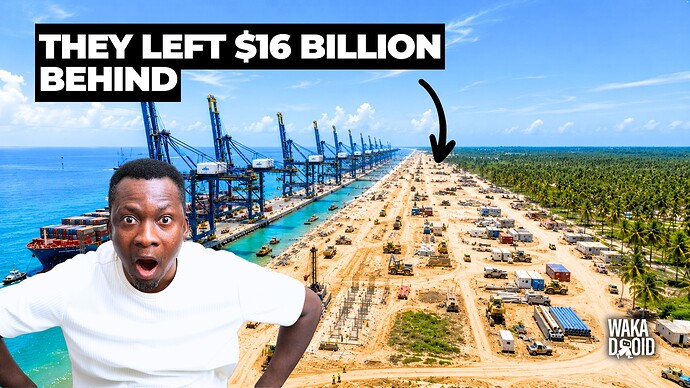
Why did Shell, Chevron and the BG Group walk out of the Olokola port and industrial complex agreement with NNPC
Olokola PPP and Nigerian infrastructure legal-risk notes
Olokola case study
Why Shell Chevron and BG Group exited Olokola
Shell, Chevron and BG Group exited the Olokola LNG and broader port-industrial concept mainly because the project stalled for years without reaching Final Investment Decision, which made it commercially unattractive relative to other opportunities in their portfolios.[1][2][3]
Chevron’s stated reasons were a review of its investment portfolio, lack of progress on the project, and a reprioritisation of resources toward growing domestic gas supply.[2]
BG Group had already withdrawn earlier, and later reporting consistently links its exit to the same underlying problem of loss of confidence in the project’s trajectory and commerciality.[3][1]
The deeper structural issues included prolonged failure to move beyond the MoU stage, unresolved gas supply and financing questions, weak governance alignment, and policy uncertainty around the project environment.[2][3]
Later commentary also described Olokola and Brass LNG as examples of projects undermined by interference, weak coordination, and instability in the policy and decision environment.[3]
Olokola as a PPP failure case study
Olokola can be framed as a PPP failure because a conceptually attractive state-private partnership around LNG, port infrastructure and industrial development collapsed when the public side could not convert political ambition into a bankable, governable project structure.[4][5][3]
The intended PPP logic was straightforward: government and NNPC would provide state backing, land and strategic participation, while the private partners would provide capital, technical capability and market access.[5][4][3]
In practice, the project remained stuck at pre-FID stage for years, and the private sponsors eventually exited, leaving NNPC as sole shareholder.[1][2][3]
A useful analytical frame is to test Olokola against common PPP failure factors such as unclear risk allocation, weak public-sector capacity, poor regulation, and project-preparation failure.[6][7]
For a written case study, the core sections can be background, PPP structure, timeline, failure diagnosis, consequences, and lessons for future Nigerian infrastructure PPPs.[8][1][2][3]
Common PPP pitfalls for port infrastructure
Port PPPs often fail when governments pursue them mainly because of fiscal pressure instead of because PPP is the most suitable procurement and delivery model for the asset.[9][10]
A frequent problem is weak feasibility work, especially overoptimistic traffic forecasts and inadequate integration with hinterland road, rail and logistics systems.[11][12][13]
Another major pitfall is misallocation of demand and revenue risk in markets where the state still shapes trade policy, tariffs, and competition among ports.[14][11]
Weak regulation, limited public-sector capacity, political interference, hidden fiscal liabilities, and poor contract-management discipline are also common sources of failure in port PPPs.[10][12][13][9]
Nigeria legal red flags
Cross-sector legal-regulatory patterns to avoid
For Nigerian PPPs, the most dangerous issue is often not one single statute but a legal-regulatory configuration that creates uncertainty, discretion and conflicting mandates.[15][16]
Key red flags include fragmented authority across federal and state institutions, unclear hierarchy between sector laws and PPP laws, politically controlled tariffs, overreliance on discretionary waivers, weak dispute-resolution design, and laws that permit unilateral concession changes without predictable compensation.[16][17][9][10][11][15]
Other warning signs include generic PPP laws with weak implementation detail, contradictions between concession promises and tax or investment statutes, weak land and environmental processes, poor transparency around guarantees and contingent liabilities, and the absence of disciplined renegotiation rules.[17][18][9][10][15][16]
Cross-sector checklist table
| Dimension | Legal or regulatory pattern to avoid | Why it is a red flag |
|---|---|---|
| Institutional authority | Fragmented mandates where federal MDAs, states, and special agencies all claim concession authority over the same asset.[15][17] | Creates jurisdictional conflict, delay, and litigation risk. |
| Hierarchy of laws | No clear rule on whether the sector act, PPP law, state law, or investment law prevails.[15][16] | Weakens contract certainty and investor confidence. |
| Tariff and pricing powers | Political or discretionary control over tariffs rather than formula-based regulation.[11][13] | Makes project revenue vulnerable to unilateral change. |
| Waivers and exemptions | Heavy dependence on ministerial or presidential waivers instead of codified rights.[15][17] | Makes project economics fragile and revocable. |
| Dispute resolution | Rules that weaken arbitration or force disputes into slow local courts only.[10][16] | Raises enforcement risk and financing cost. |
| Unilateral change powers | Broad state powers to vary, suspend or revoke concessions without clear compensation rules.[9][14] | Creates expropriation risk. |
| PPP law quality | Generic PPP laws with little detail on risk allocation, disclosure, monitoring and contract status.[9][10] | Produces ad hoc and politicised deal-making. |
| Investment and tax consistency | Contract promises that are not clearly grounded in company, tax or investment statutes.[15][18][17] | Invites audit, reform and legal challenge later. |
| Environmental and land processes | Shortcuts around EIA, compensation and acquisition procedures.[16] | Encourages community litigation and delay. |
| Transparency and renegotiation | No rules for disclosure of guarantees or disciplined renegotiation.[9][10] | Encourages hidden liabilities and post-award opportunism. |
Transmission projects
Nigeria transmission PPP legal-risk checklist
For transmission PPPs in Nigeria, legal-risk screening should focus on whether the framework clearly supports long-tenor grid investments with stable planning, tariff recovery, access rights and enforceable payment security.[15][16]
| Dimension | Legal or regulatory pattern to avoid for transmission | Why it is a red flag |
|---|---|---|
| Institutional authority | Overlap between federal transmission mandates and state electrification or PPP laws over the same high-voltage corridor.[15][17] | Can trigger conflicting permits, corridor disputes and injunctions. |
| Planning versus project law | Advancing a line under general PPP law without embedding it in formal transmission expansion planning.[19][20] | Future planning decisions may deprioritise or strand the line. |
| Tariff and wheeling powers | Ad hoc or political setting of wheeling charges instead of transparent regulatory formulae.[9][10] | Makes revenue recovery uncertain and weakens bankability. |
| Cost allocation and recovery | No clear legal rule on whether costs fall on generators, DISCOs, bulk trader, states or end-users.[9][20] | Produces payment disputes and delayed recovery. |
| Access and dispatch rights | Weak definition of open access, curtailment rules and priority of use on the line.[19][20] | System operation decisions can destroy contracted revenue. |
| Special-project waivers | Reliance on strategic-project waivers to bypass grid code, procurement or approval rules.[15][16] | Makes the project politically exposed and legally fragile. |
| Dispute resolution | Dispute rules that force technical and payment disputes into ordinary courts only.[10][16] | Slows resolution and raises lender concern. |
| Unilateral change powers | Powers allowing licence or tariff changes without predictable compensation.[9][14] | Undermines long-term project economics. |
| Procurement law mismatch | Using short-term EPC-style procurement rules for 20-30 year PPP concessions.[9][10] | Produces weak lifecycle contracts and poor risk allocation. |
| Sector and investment-law inconsistency | Tariff stabilisation, forex protection or guarantees not clearly grounded in sector and investment law.[15][18][17] | Creates ultra vires risk and future dispute. |
| Right-of-way and land rules | Weak statutory basis for corridor acquisition, compensation and wayleaves.[16][19] | Exposes the line to community resistance and stoppages. |
| Environmental and social approvals | ESIA treated as a formality or bypassed for priority lines.[16][20] | Invites legal challenge and redesign costs. |
| Payment security structures | No robust legal basis for escrow, guarantees, step-in rights or payment support.[9][10] | Leaves the SPV exposed to chronic payment default risk. |
| Transparency and renegotiation | No disclosure of contracts, guarantees or renegotiation framework.[9][10] |
Sources
https://www.perplexity.ai/search/b8ae5eee-ba3f-4b85-b1a7-5279d9b1ec70#6
[1] Chevron Pulls Out from Olokola LNG, Nigeria - Offshore-Energy.biz Chevron Pulls Out from Olokola LNG, Nigeria - Offshore Energy
[2] 10,000 jobs at risk, as Chevron, Shell pull out from OKLNG https://sweetcrudereports.com/10000-jobs-at-risk-as-chevron-shell-pull-out-from-oklng/
[3] Brass, Olokola LNG: Succumbing to organised sabotage https://guardian.ng/saturday-magazine/cover/brass-olokola-lng-succumbing-to-organised-sabotage/
[4] NNPC, ChevronTexaco, BG Group and Shell sign Memorandum of … https://www.gulfoilandgas.com/webpro1/main/mainnews.asp?id=1344
[5] LNG Japan Joins Nigerian LNG Project - Petroleum Africa https://www.petroleumafrica.com/lng-japan-joins-nigerian-lng-project/
[6] 5.3. Reasons for Unsuccessful PPP Projects during the Construction … https://ppp-certification.com/ppp-certification-guide/53-reasons-unsuccessful-ppp-projects-during-construction-phase
[7] Exploring the major causes of PPP project failures - a survey Exploring the major causes of PPP project failures - a survey
[8] Olokola LNG: NNPC allays fears over Chevron, Shell exit https://sweetcrudereports.com/olokola-lng-nnpc-allays-fears-over-chevron-shell-exit/
[9] Mastering the Risky Business of Public-Private Partnerships in … https://www.imf.org/en/publications/departmental-papers-policy-papers/issues/2021/05/10/mastering-the-risky-business-of-public-private-partnerships-in-infrastructure-50335
[10] [PDF] When and How to Use Public-Private Partnerships in Infrastructure https://www.nber.org/system/files/working_papers/w26766/w26766.pdf
[11] Public Private Partnerships in Ports / Port Reform - World Bank PPP https://ppp.worldbank.org/sector/transportation/ports
[12] [PDF] Public-Private Partnerships for the Provision of Port Infrastructure https://www.vliz.be/imisdocs/publications/272442.pdf
[13] [PDF] Public Private Partnership (PPP) for Ports Development and Operation https://www.unescwa.org/sites/default/files/event/materials/PPP%20for%20Ports%20Development%20and%20Operation_Final%20Report_.pdf
[14] The potential role of public–private partnerships in the upgrade of … The potential role of public–private partnerships in the upgrade of port infrastructure: normative and positive considerations - The Intersector Project
[15] [PDF] Overview of the Legal and Regulatory Framework for Doing … https://www.primerus.com/files/Overview%20of%20the%20Legal%20and%20Regulatory%20Framework%20for%20Doing%20Business%20in%20Nigeria.pdf
[16] How to Protect Your Business from Legal Risks in Nigeria How to Protect Your Business from Legal Risks in Nigeria
[17] A review of Nigeria’s legal framework - Oxford Business Group https://oxfordbusinessgroup.com/reports/nigeria/2019-report/economy/learning-the-boundaries-an-overall-review-of-the-countrys-laws-and-regulations
[18] The Checklists Of Regulatory Compliance Required Of A Registered … The Checklists Of Regulatory Compliance Required Of A Registered Business Entity (Company) In Nigeria. – Legal Developments
[19] 3 transmission projects that illustrate the importance in modernizing … https://www.utilitydive.com/news/3-transmission-projects-that-illustrate-the-importance-in-modernizing-the-g/420333/
[20] How Advanced Transmission Technologies Can Modernize the US … How Advanced Transmission Technologies Can Modernize the US Power Grid | World Resources Institute
An AI summary. (Copilot)
Expand / Collapse
Here’s a clean, structured, high‑resolution summary of the expanded page you’re viewing, grounded entirely in the content from your active tab thewealthmar…
 Executive Summary of the Expanded Page
The page now presents a full analytical breakdown of the Olokola Deep Sea Port & LNG project, structured into four major domains:
- Why Shell, Chevron, and BG Group exited Olokola
- Olokola as a PPP failure case study
- Common PPP pitfalls for port infrastructure
- Nigeria‑wide legal and regulatory red flags
- Transmission‑sector PPP legal‑risk checklist
Each section is now fully elaborated with detailed explanations, patterns, and cross‑sector checklists.
- Why Shell, Chevron & BG Group Walked Away
The page explains the exits as a combination of commercial disappointment and structural governance failure:
• The project never reached FID after years of delay.
• Chevron cited portfolio reprioritisation, lack of progress, and a shift toward domestic gas.
• BG Group and Shell lost confidence in the project’s trajectory.
• Underlying issues included:• Unresolved gas‑supply arrangements
• Financing uncertainty
• Weak governance alignment
• Policy instability
• Chronic inability to move beyond MoU stage
Later commentary frames Olokola (and Brass LNG) as victims of interference, poor coordination, and unstable policy environments.
- Olokola as a PPP Failure Case Study
The page reframes Olokola as a textbook PPP failure, not just an LNG project failure.
Intended PPP Logic
• Government/NNPC: land, political backing, strategic participation
• Private partners: capital, technical expertise, market access
What Actually Happened
• Project stuck at pre‑FID for years
• All private sponsors exited
• NNPC left as sole shareholder
• No bankable structure ever emerged
Analytical Framework Suggested
A proper case study should include:
• Background
• PPP structure
• Timeline
• Failure diagnosis
• Consequences
• Lessons for future Nigerian PPPs
- Common PPP Pitfalls in Port Infrastructure
The page lists global patterns that often doom port PPPs:
• Governments choose PPPs due to fiscal pressure, not suitability
• Weak feasibility studies (especially overoptimistic traffic forecasts)
• Poor integration with road/rail logistics
• Misallocation of demand and revenue risk
• Weak regulation and public‑sector capacity
• Political interference
• Hidden fiscal liabilities
• Poor contract‑management discipline
These patterns map directly onto the Olokola experience.
- Nigeria Legal & Regulatory Red Flags
This is one of the most detailed sections. It identifies cross‑sector legal patterns that create investor risk:
Major Red Flags
• Fragmented authority between federal, state, and special agencies
• No clear hierarchy of laws (sector vs PPP vs state vs investment laws)
• Politically controlled tariffs
• Heavy reliance on discretionary waivers
• Weak arbitration and dispute‑resolution frameworks
• Broad powers for unilateral concession changes
• Generic PPP laws lacking detail
• Contradictions between concession terms and tax/investment statutes
• Weak land/EIA processes
• No transparency on guarantees or renegotiation rules
Cross‑Sector Checklist Table
The page includes a full table showing:
• The legal pattern to avoid
• Why it is a red flag
This is effectively a diagnostic tool for screening Nigerian PPPs.
- Transmission‑Sector PPP Legal‑Risk Checklist
A parallel checklist is provided for transmission projects, highlighting risks such as:
• Overlapping federal/state mandates
• Advancing projects outside formal grid‑expansion planning
• Politicised wheeling‑charge setting
• Unclear cost‑allocation rules
• Weak open‑access and curtailment rules
• Overuse of “special waivers”
• Forcing disputes into slow courts
• Unpredictable licence/tariff changes
• Procurement mismatches (EPC rules used for 20–30‑year concessions)
• Weak corridor acquisition and ESIA processes
• Poor payment‑security structures
This section mirrors the port PPP analysis but tailored to transmission.
- Sources
The page ends with a list of 20+ sources, including:
• SweetCrude Reports
• Guardian Nigeria
• IMF
• World Bank PPP resources
• Oxford Business Group
• Academic PPP failure literature
If you want, I can also produce:
• A one‑page executive brief
• A slide‑ready outline
• A PPP failure diagnostic checklist you can reuse
• A comparison of Olokola vs Lekki/Dangote port models
• A risk‑matrix table for Nigerian infrastructure PPPs
Just tell me the format you want.