Preambles.
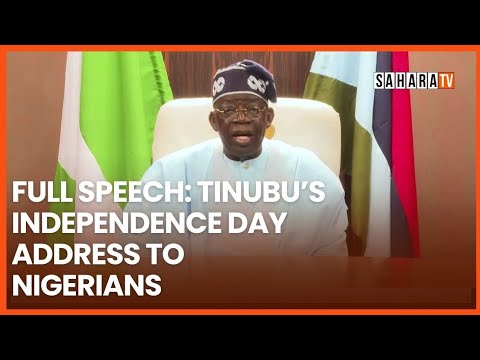
1. Summarise the video
This video features the Independence Day address by Nigerian President Bola Ahmed Tinubu as the country marks 66 years of independence. In his speech, the President reflects on Nigeria’s historical challenges and outlines the transition from a period of difficult economic reforms to a new phase of national prosperity.
Key Highlights:
- Reflection on Progress (0:09-3:26): The President acknowledges the nation’s struggles—including past wars, political instability, and economic crises—while praising the resilience of the Nigerian people, from farmers to entrepreneurs.
- Economic Reforms (3:27-8:04): Describing the country’s economic state in 2023 as a “sick patient” requiring surgery rather than just painkillers, he defends the recent, often painful, economic reforms as necessary measures that have stabilized foreign reserves, increased growth to over 4%, and boosted non-oil exports.
- Future Outlook and Prosperity (8:05-16:29): With the “emergency treatment” phase complete, the administration is shifting focus to shared prosperity. This includes:
- Reducing the cost of living by investing in mechanized agriculture, irrigation, and better transportation/infrastructure (9:35-11:00).
- Promoting job creation through industrial growth and digital connectivity (11:01-12:47).
- Strengthening social safety nets such as the Education Loan Fund, consumer credit schemes, and improved primary healthcare (13:11-15:06).
- Conclusion (16:30-18:53): President Tinubu declares the end of the “age of reform” and the beginning of the “age of prosperity,” urging Nigerians to move forward with confidence and collective faith in the nation’s future.
2. What economic improvements does the speech mention?
In his Independence Day address, President Bola Ahmed Tinubu outlined several key economic improvements achieved over the past three and a half years. He characterized these reforms as essential “emergency treatment” to correct the nation’s economic course (8:05–8:14).
Key economic achievements mentioned include:
- Economic Growth: The President reported that the economy grew by over 4% during the year (6:37–6:42), a figure supported by recent economic data showing GDP expansion (0, 1, 5, 8).
- Record Non-Oil Exports: In 2025, the country recorded its highest-ever revenue from non-oil exports, exceeding $6 billion (7:10–7:23). This milestone reflects a successful effort to diversify income sources (0, 6, 9).
- Stabilized Foreign Reserves and Markets: The speech highlights that foreign reserves have been rebuilt and the foreign exchange market has stabilized (6:57–7:07).
- Reduced Oil Theft and Inflation: The President noted that oil theft has decreased (4) and that inflation has fallen substantially from its previous peak (6:51–6:57).
President Tinubu described these indicators as proof that the reforms have strengthened the country’s economic stability and resilience, signaling a transition from an “age of reform” to an “age of prosperity” (16:26–16:34).
Sources:
- Nigeria GDP Annual Growth Rate - Trading… (tradingeconomics.com)
- Nigeria’s economy grows over 4% in… (Premium Times)
3. What social safety nets were mentioned in the speech?
In his speech, President Bola Ahmed Tinubu identified several social safety net programs designed to support vulnerable citizens and ease the economic burden on Nigerian families. These measures, mentioned between (13:57) and (15:06), include:
- Direct Support for Households: Strengthening direct assistance to the poorest households and improving the National Social Register to ensure aid effectively reaches those in genuine need (13:57–14:11).
- Nigeria Education Loan Fund: A program ensuring that children from low-income families can pursue education without being held back by their parents’ inability to pay fees (14:11–14:26).
- Consumer Credit (CreditCorp): An initiative providing working Nigerians with access to consumer credit, allowing them to purchase essential assets—such as vehicles, solar systems, and digital devices—without needing years of prior savings (14:26–14:48).
- Primary Healthcare and Basic Services: Collaborative efforts with state and local governments to strengthen primary healthcare and essential public services (14:48–15:06).
- Pension Reform: Since 2023, the government has focused on paying salaries and pensions on time and in full, while reforming the national pension program to better benefit retirees and vulnerable individuals (15:06–15:20).
4. What steps will the government take to reduce living costs?
The President states that the government’s first priority to lower the cost of living is to reduce the cost of producing and moving goods within the country. To achieve this, the administration is focusing on several key areas (09:35 - 09:49):
- Agricultural Investment: Expanding mechanized irrigation and dry-season farming, improving access to seeds and fertilizer, and increasing overall farm mechanization (09:56 - 10:12).
- Infrastructure Development: Building and completing roads, railways, and ports to better connect farms and factories to markets, which helps reduce spoilage and transportation delays (10:12 - 10:25).
- Supply Chain Efficiency: Ensuring that products move faster and more cheaply from the farm to the market, and lowering electricity costs for manufacturers, which will ultimately lead to lower prices for consumers (10:25 - 11:01).
5. How is the national social register improved?
According to the President, the government is working to improve the National Social Register to ensure that direct support and assistance reach those who genuinely need it the most. (14:04 - 14:11)
6. Who qualifies for social register support?
According to the President, the government is improving the National Social Register to ensure that direct support and assistance are targeted specifically toward the poorest households in the country. This ensures that aid effectively reaches those who are in genuine need (13:57 - 14:11).
7. How does the government identify poor households?
The provided video address does not detail the specific technical criteria or administrative processes used to identify the poorest households for the National Social Register. It only mentions that the government is currently working to improve the register to ensure that direct support and assistance effectively reach those who genuinely need it most (14:04 - 14:11).
8. What specific aid does the register provide?
The President explains that the government is strengthening direct support to the poorest households to help lift them out of poverty. While the speech does not list a comprehensive catalog of every item or service provided, it highlights specific initiatives tied to this effort:
- Education Support: The Nigeria Education Loan Fund ensures that children from low-income families can continue their education without being held back by their parents’ inability to afford fees (14:11–14:26).
- Consumer Credit: Through CreditCorp, working Nigerians can access credit to acquire essential assets like vehicles, solar systems, and digital devices without requiring years of prior savings (14:26–14:48).
- Essential Public Services: The government is working with state and local authorities to strengthen primary healthcare and other basic public services on which vulnerable Nigerians depend (14:48–15:06).
9. What items can be bought with credit?
The President explains that CreditCorp provides working Nigerians with access to consumer credit, enabling them to acquire essential assets without needing years of savings. Specifically mentioned assets include:
- Vehicles
- Solar systems
- Digital devices
(14:26 - 14:48)
10. What is the goal of consumer credit?
The President states that the goal of CreditCorp is to provide working Nigerians with access to consumer credit. This initiative aims to help individuals acquire essential assets—such as vehicles, solar systems, and digital devices—without having to spend years accumulating personal savings first. (14:26 - 14:48)
11. Does the speech discuss poverty reduction goals?
Yes, the President outlines a broader strategy for poverty reduction that focuses on long-term economic growth and job creation to “defeat” poverty rather than just managing it (15:32-15:40). Beyond the targeted social support programs, the President details several key economic pillars:
- Lowering the Cost of Living: The government intends to reduce poverty by making food and essential goods more affordable through investments in mechanized irrigation, dry-season farming, and improved access to seeds and fertilizers (9:39-10:09).
- Infrastructure Investment: To connect farms and factories to markets more efficiently, the administration is prioritizing the construction of roads, railways, and ports, which the President argues will lower production costs (10:15-11:00).
- Industrial and Digital Growth: The President emphasizes using the country’s gas resources to power new industries and expanding digital connectivity to underserved communities to help young Nigerians participate in the modern economy (11:44-12:07).
- Sustained Economic Growth: The core objective is to create millions of productive opportunities through industrial growth, which the President views as the primary engine for lifting citizens out of poverty (15:42-15:53).
12. How does the President define prosperity?
The President defines prosperity not as abstract numbers or larger statistics, but as a personal reality for Nigerians. According to the speech, true prosperity is a state in which:
- Farmers can cultivate their land in safety, produce more at a lower cost, and earn a decent return (08:51-09:02).
- Factories have access to reliable power and businesses can obtain necessary credit (09:05-09:12).
- Young people are able to find productive work (09:12-09:15).
- Families find food and transportation affordable, education is within reach, and they can look toward the future with confidence (09:15-09:30).
13. What is the first priority for prosperity?
The President states that the first priority to achieve prosperity is to bring down the cost of living for Nigerians (09:35-09:39). He explains that the government plans to achieve this by lowering the expenses associated with producing and transporting the goods that citizens consume daily (09:39-09:49).
14. What is the focus of the new age of prosperity?
The President describes the transition from an “age of reform” to an “age of prosperity” as a shift toward shared and widespread economic growth (16:26-16:45). The core focus of this new phase includes:
- Economic Stability: Leveraging the foundational corrections already made to the economy to pursue long-term growth (15:55-16:17).
- Lived Experience: Ensuring the country’s national potential is finally reflected in the everyday lives of Nigerians from all walks of life (16:38-16:45).
- Productive Opportunity: Moving beyond simply managing poverty to defeating it by creating millions of productive opportunities across the country (15:32-15:53).
- Building the Future: Transitioning from difficult, necessary sacrifices to building a nation where every child can dream beyond the circumstances of their birth (17:56-18:14).
15. How will the government create new jobs?
The President outlines several core strategies and economic pillars intended to foster job creation and drive productive opportunities for Nigerians (11:33-11:44):
- Industrial Expansion: The government plans to utilize the country’s gas resources to power new industries and revive factories within industrial centers (11:44-11:57).
- Infrastructure Development: Significant investments are being directed toward roads, railways, and ports to improve connectivity and facilitate the efficient transport of goods from farms and factories to markets (10:15-10:25).
- Agricultural Modernization: By focusing on mechanized irrigation, dry-season farming, and better access to seeds and fertilizers, the government aims to increase agricultural productivity, which serves as a major employment sector (09:56-10:09).
- Digital Connectivity: The administration is prioritizing the expansion of digital infrastructure to ensure that communities across the nation can participate in the modern economy (11:57-12:07).
- Business Support: The government intends to support Nigerian businesses by providing the necessary finance and infrastructure to help them grow and succeed (12:11-12:17).
16. How does digital growth help young people?
The President explains that expanding digital connectivity is vital for integrating communities that have been excluded from the modern economy for too long (11:57-12:04). By investing in this infrastructure, the government aims to empower young Nigerians to leverage their talent, energy, and ambition to build businesses, such as “unicorns,” and create new opportunities within the country (11:10-11:20, 12:39-12:44).
17. Who is eligible for consumer credit?
The President’s speech does not detail specific eligibility requirements for obtaining credit. It mentions that the Credit Corp initiative aims to give working Nigerians access to consumer credit, enabling them to acquire essential assets like vehicles, solar systems, and digital devices without needing years of prior savings (14:27-14:45). Regarding businesses, the President states the government intends to provide the necessary finance and infrastructure to help them grow, but he does not outline the formal criteria for qualification (12:11-12:17).
18. Has Credit Corp already been incorporated or it's purely in the pipeline? When? What's the capital base? Who manages it?
The provided video transcript does not contain information regarding the incorporation status, date of establishment, capital base, or management structure of the Credit Corp initiative. It only mentions that the program is intended to provide working Nigerians with access to consumer credit for acquiring assets like vehicles and solar systems (14:27-14:45). The answer to your specific questions is not in the video; however, this video is about President Tinubu’s Independence Day address outlining his administration’s economic reforms and future vision for Nigeria, would you like to know more about that?
19. Tell us ALL that he said about Credit Corp.
President Tinubu stated that the Credit Corp initiative is designed to provide working Nigerians with access to consumer credit. This program allows individuals to acquire essential assets—such as vehicles, solar systems, and digital devices—without the need to accumulate years of savings first (14:27-14:45).
20. No timeline for it?
The provided video transcript does not contain any mention of a specific timeline or implementation schedule for the Credit Corp initiative (14:27-14:45). The speech focuses on the broader goals of the program—such as providing working Nigerians access to credit for essential assets—rather than technical rollout dates.
Section 1
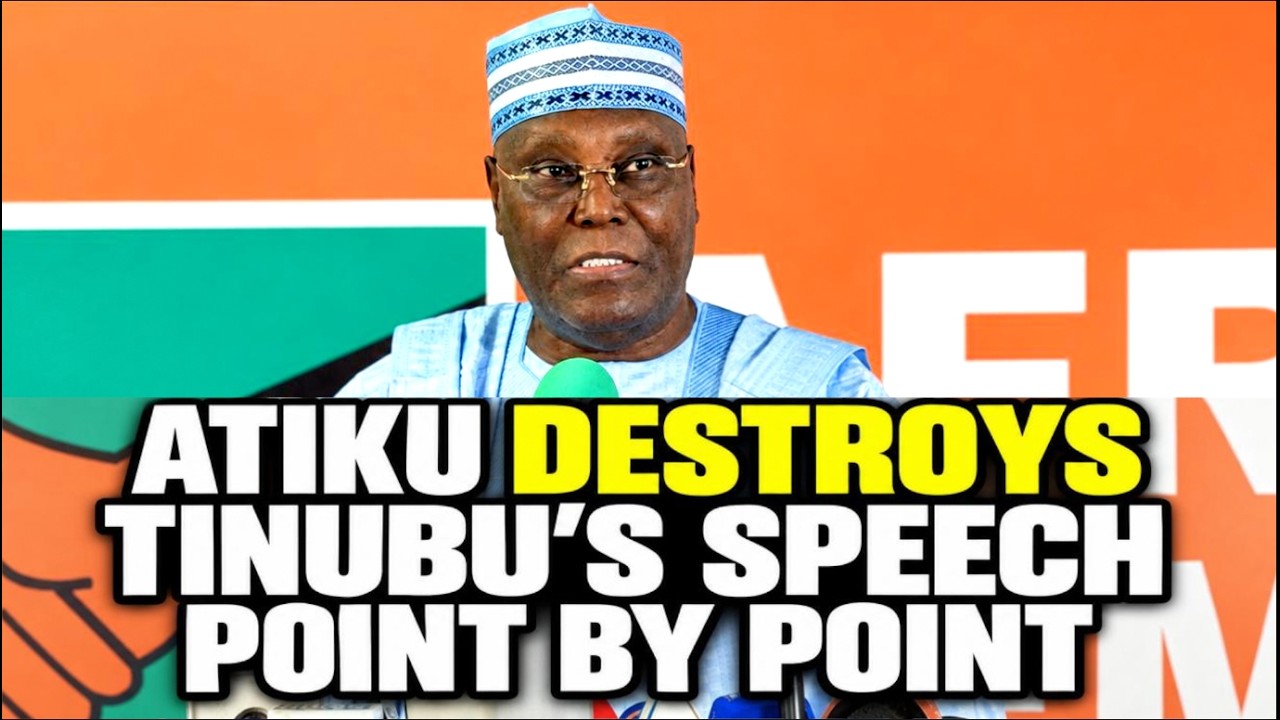
1. Summarise the video
This video features a formal State of the Nation broadcast by Atiku Abubakar, in which he provides a critical point-by-point response to President Bola Tinubu’s October 1st, 2026, Independence Day speech.
Key critiques and points raised by Atiku include:
- Economic Crisis: Atiku describes the last three years as the most severe cost-of-living crisis in Nigerian history, citing the removal of the fuel subsidy (2:34) and rising food costs, such as eggs and bread, as major drivers of poverty (6:50-7:14).
- Fuel Policy: He challenges the current administration’s approach to fuel subsidies and proposes his own plan, which includes a capped production subsidy specifically for fuel refined within Nigeria to help lower costs for citizens (8:18-9:15).
- Debt and Corruption: He criticizes the government’s high public debt, reported at ₦166.79 trillion (14:36), and questions the lack of transparency regarding large-scale infrastructure projects like the Lagos-Calabar Coastal Highway (13:08).
- Governance and Security: Atiku highlights the ongoing insecurity, including kidnapping and killings (3:05), and questions the legitimacy of government cash transfer claims (16:27) and the effectiveness of current student loan programs (11:03).
- Political Freedom: He calls for the release of citizens arrested for political advocacy, specifically mentioning those wearing “Tinubu Must Go” t-shirts (23:22), and emphasizes the need for election integrity and the protection of the people’s vote (23:57).
Atiku concludes his address by asserting that the current administration has failed to deliver on its promises and calls for a change in leadership to restore the nation’s prosperity (27:13).
2. What specific fuel subsidy plan did Atiku propose?
In his broadcast, Atiku Abubakar outlines a specific plan for fuel affordability that contrasts with the current administration’s approach. His proposal centers on the following key points (8:18 - 9:15):
- Capped Production Subsidy: Instead of a general subsidy, he proposes a capped, budgeted production subsidy that is tied exclusively to fuel refined within Nigeria.
- Local Refining Focus: The subsidy would only apply to fuel produced domestically, including output from modular refineries. Under this plan, imported petrol would not qualify for the subsidy.
- Consumer Benefit: The primary goal is to ensure that the subsidy benefit reaches the end consumer through lower pump prices.
- Transparency and Accountability: He commits to publishing the costs of the program, subjecting the payments to independent audits, and funding the initiative by cutting government waste.
3. What are Atiku's main concerns about national debt?
Atiku Abubakar raises significant concerns regarding Nigeria’s rising public debt, which he states reached ₦166.79 trillion by the end of June 2026 (14:36 - 14:48). His primary points of contention include:
- Lack of Accountability: He criticizes the government for pursuing additional loans, such as the $1.5 billion World Bank loan, without adequately demonstrating what previous borrowed funds have achieved (14:48 - 14:59).
- Transparency Demands: He insists that before the government borrows more money, it must provide a clear accounting of past loans by naming specific projects, detailing their costs, and identifying who benefited from the expenditure (15:02 - 15:12).
4. What does the video say about election integrity?
In his broadcast, Atiku Abubakar expresses a strong commitment to ending election rigging in Nigeria (23:57 - 24:06). He outlines several key promises to ensure integrity, including:
- Respecting Independence: He pledges to uphold the autonomy of the electoral body (24:10 - 24:12).
- Transparency: He commits to supporting the prompt publication of results from every individual polling unit (24:12 - 24:16).
- Accountability: He insists that anyone caught buying votes or altering election results must face legal consequences, regardless of their political affiliation (24:16 - 24:24).
- Voter Empowerment: He encourages citizens to remain vigilant, protect their votes, and refuse intimidation, emphasizing that the power to choose belongs to the people (25:09 - 25:31).
5. Why does he want election result transparency?
Atiku Abubakar advocates for the prompt publication of results from every individual polling unit as a key measure to end election rigging in Nigeria (23:57 - 24:16). He claims that this level of transparency is essential to ensure that voters’ choices are accurately represented, emphasizing that results must be published promptly to prevent tampering or manipulation after votes are cast (24:16 - 24:27).
6. How will he stop people from rigging?
Atiku Abubakar outlines several measures to address election rigging in Nigeria (23:57 - 24:06). His proposed actions include:
- Protecting Electoral Independence: He pledges to respect the autonomy of the electoral body (24:10 - 24:12).
- Transparency in Results: He commits to supporting the prompt publication of election results from every single polling unit (24:12 - 24:16).
- Strict Accountability: He states that anyone involved in buying votes or altering results will face the law, regardless of their political party (24:16 - 24:24).
- Encouraging Vigilance: He urges citizens to actively protect their votes and refuse any form of intimidation during the electoral process (25:09 - 25:31).
7. How can citizens stop voter intimidation?
According to Atiku Abubakar, to counter election rigging and intimidation, citizens should take the following actions:
- Stay Vigilant: He emphasizes that voters must remain alert throughout the electoral process (25:26-25:29).
- Protect Your Vote: He explicitly urges citizens to actively defend their votes and their rights at the polling units (25:09-25:11; 25:29-25:31).
- Refuse Intimidation: He encourages voters to stand their ground and not allow themselves to be intimidated by those attempting to manipulate the process (25:09-25:11; 25:40-25:42).
- Exercise Voting Power: He reminds citizens that the power of choice belongs to them and they should use their votes to determine the country’s direction peacefully (24:35-24:39; 27:06-27:09).
8. How will he handle his own party members?
Atiku Abubakar states that if he is elected president, he will hold anyone caught buying votes or altering election results accountable under the law. He emphasizes that this commitment applies even if the person belongs to his own party (24:16 - 24:24).
9. List Atiku's key criticisms?
In his broadcast, Atiku Abubakar highlights several key criticisms regarding the integrity and conduct of the Nigerian election process:
- Election Rigging: He expresses deep concern over the history of election rigging and promises to actively work to end this practice (23:57-24:06).
- Lack of Transparency: He criticizes the current system’s failure to ensure that votes are accurately counted and published, arguing that there is a lack of accountability in the reporting of results (24:00-24:16).
- Intimidation and Interference: He denounces instances of voter intimidation and emphasizes that citizens are often discouraged from participating freely (25:09-25:11).
- Need for Institutional Accountability: He argues that the police and other state institutions should not be used by political parties to manipulate the process or silence opposition through arrests or intimidation (23:39-23:48).
10. Atiku's plan for fuel costs?
Atiku Abubakar proposes a plan to make life more affordable by introducing a capped, budgeted production subsidy specifically for fuel refined within Nigeria (8:18-8:32). Key elements of his strategy include:
- Local Refining Focus: The subsidy would only apply to verified fuel produced locally, including output from modular refineries, while excluding imported petrol (8:25-8:41).
- Consumer Benefit: The primary goal is to ensure the benefits reach the public through lower pump prices (8:41-8:44).
- Accountability: He promises to publish the costs, subject payments to independent audits, and fund the program by cutting government waste (8:46-8:52).
- Economic Growth: The overarching principle is to encourage production and refining within the country to create jobs while lowering costs for Nigerians (8:54-9:07).
11. How does local refining lower costs?
Atiku Abubakar explains that by implementing a capped, budgeted production subsidy specifically for fuel refined within Nigeria, the government can directly reduce pump prices for the public. The speaker argues that this strategy encourages local refining, which creates jobs domestically while ensuring that the cost-saving benefits reach consumers directly rather than supporting imports (8:18 - 9:07).
12. How will he fund the subsidy?
Atiku Abubakar states that his proposed production subsidy for fuel refined within Nigeria would be funded primarily by cutting government waste (8:46 - 8:52).
13. What specific government waste will he cut?
The video states that Atiku Abubakar intends to fund his proposed production subsidy by cutting government waste (8:46 - 8:52), but he does not provide a specific, itemized list of which government expenditures he classifies as “waste” or which specific programs he intends to eliminate to secure these funds.
14. How would he monitor government spending?
Atiku Abubakar proposes several specific measures to ensure accountability and transparency regarding the management of the fuel production subsidy and government expenditures:
- Public Disclosure: He commits to publishing the costs associated with the program (8:46-8:47).
- Independent Oversight: He promises that all payments made under the subsidy scheme will be subjected to independent audits to verify the legitimacy of the claims (8:47-8:49).
- Digital Transparency: He advocates for a system where government financial records and projects are accessible in a digital format, suggesting that data should be available for citizens to view on their personal devices like laptops (21:40-21:52).
- Project Accountability: He demands that the government clearly names the projects funded by public money, details their specific costs, and discloses who was paid for the work (15:02-15:12).
15. What is his plan for the economy?
Atiku Abubakar’s stated economic strategy centers on the primary goal of making life more affordable for Nigerians (8:16-8:18). His proposed approach includes the following elements:
- Production-Led Relief: He proposes a capped, budgeted production subsidy specifically for fuel refined within Nigeria to lower pump prices for consumers (8:22-8:44).
- Fiscal Discipline: He emphasizes the need to fund government programs by cutting waste rather than relying solely on borrowing (8:49-8:52).
- Transparency and Accountability: He commits to independently auditing government payments, publishing project costs, and ensuring that public spending is digitally transparent for citizens to monitor (8:46-8:49; 15:02-15:12; 21:40-21:52).
- Local Economic Empowerment: He advocates for domestic production and refining to stimulate job creation within the country (8:54-9:07).
- Investment in Human Capital: He highlights the necessity of enforcing existing laws for free primary and secondary education to improve access to learning (15:46-16:11).
16. What is his view on borrowing?
Atiku Abubakar expresses significant concern regarding the country’s public debt, which he notes reached ₦166.79 trillion by the end of June 2026 (14:36-14:43). Regarding his economic plan, he argues that the government should prioritize transparency and accountability before considering further borrowing, such as the 1.5 billion USD World Bank loan currently under discussion (14:46-14:54).
He contends that the government must clearly explain what previous borrowed funds have delivered, specifically by:
- Naming the projects funded by past loans (14:57-15:02).
- Showing the costs of those projects (15:06-15:08).
- Identifying the beneficiaries and confirming who received the payments (15:08-15:10).
17. How does he want to fund programs instead?
Atiku Abubakar proposes that instead of relying on external borrowing, the government should fund its programs by cutting government waste (8:46 - 8:52).
He argues that by eliminating inefficient spending and fiscal excesses, the government can generate the necessary resources to finance key initiatives, including his proposed capped production subsidy for fuel refined within Nigeria (8:22 - 8:44).
18. Does he plan to end all borrowing?
The video does not state that Atiku Abubakar intends to completely end all government borrowing. Rather, he argues that the government should demonstrate transparency and accountability regarding the utility and outcomes of past loans before considering further debt, such as the 1.5 billion USD loan under discussion (14:36-15:12).
19. What debt does he criticize?
Atiku Abubakar expresses significant concern regarding Nigeria’s total public debt, which he states reached ₦166.79 trillion as of the end of June 2026 (14:36-14:43). Furthermore, he specifically criticizes the government’s current plans to secure an additional 1.5 billion USD loan from the World Bank (14:46-14:54).
He argues that the government must prioritize transparency and accountability before taking on further debt for the following reasons:
- Demonstrating Value: He claims the government has failed to show what previously borrowed money has actually delivered for the country (14:57-15:02).
- Project Specifics: He demands that the government clearly names the specific projects funded, details their costs, and provides proof of who benefited from the expenditures (15:02-15:12).
- Democratic Accountability: He asserts that in a democratic government, the people have a right to know how public money is spent, especially before the nation is burdened with more debt (15:12-15:15).
20. Why does he want independent audits?
Atiku Abubakar advocates for independent audits of government payments to ensure transparency, accountability, and fiscal discipline (8:46-8:49). By making these audits public, he aims to verify the cost of his proposed fuel production subsidy and ensure that the benefits reach the intended consumers through lower pump prices rather than being lost to inefficiency or corruption (8:43-8:52).
21. Why does he prioritize local fuel refining?
Atiku Abubakar advocates for focusing on local refining and a capped production subsidy because he believes these measures will help make fuel and living costs more affordable for Nigerians (8:18-8:22). His proposed plan is built on several key principles:
- Domestic Production: By tying the subsidy only to fuel refined within Nigeria, including from modular refineries, he aims to incentivize local production rather than importing fuel (8:22-8:36).
- Direct Consumer Benefit: The primary goal is to ensure that the subsidy results in lower pump prices for the public, rather than being lost to other inefficiencies (8:41-8:43).
- Economic Growth: He argues that this approach will help create local jobs and stimulate economic activity within the country (8:56-9:04).
- Fiscal Control: By capping the subsidy and committing to independent audits of the payments, he intends to manage government spending more effectively and cut out waste (8:24-8:52).
22. List all original initiatives he proposes, beyond criticising the president's speech.
In his broadcast, Atiku Abubakar outlines several specific policy initiatives and proposals aimed at addressing Nigeria’s economic and governance challenges:
- Capped Production Subsidy: He proposes introducing a capped, budgeted production subsidy specifically for fuel that is refined within Nigeria, including output from modular refineries, to help lower pump prices (8:22-8:36).
- Independent Auditing: He calls for the independent auditing and public disclosure of all subsidy payments to ensure funds are not lost to inefficiency and that benefits actually reach consumers (8:46-8:52).
- Fiscal Discipline: He emphasizes the need to cut government waste to provide the necessary funding for public programs (8:46-8:52).
- Transparency in Contracts: He advocates for the publication of all bidding processes, evaluations, and contract details for major infrastructure projects, such as the Lagos-Calabar coastal highway, to ensure accountability (13:36-13:52).
- Upholding Educational Law: He proposes enforcing the existing law that mandates free education for every Nigerian child from primary to secondary school, which he notes was passed during his previous administration (15:46-16:11).
- Electoral Reform: He promises to end election rigging by supporting the prompt publication of results from every polling unit and insisting that those caught violating electoral laws face prosecution, regardless of their political affiliation (24:06-24:24).
23. What are his plans for electoral reform?
Atiku Abubakar outlines several specific commitments to reform the electoral process, stating that if elected, he would prioritize the following measures:
- Protecting Voting Integrity: He promises to work towards ending election rigging by ensuring that every vote cast is counted properly (24:06 - 24:10).
- Transparency in Results: He commits to supporting the prompt publication of election results directly from every individual polling unit (24:13 - 24:16).
- Enforcing the Law: He insists that any individual caught attempting to buy votes or alter results must face the full extent of the law, regardless of their political party affiliation (24:16 - 24:24).
- Upholding Independence: He pledges to respect the independence of the electoral commission to ensure the process remains fair (24:10 - 24:13).
24. Itemise all specific and quantified macroeconomic parameters cited to buttress his claims
In his broadcast, Atiku Abubakar cited the following quantified macroeconomic parameters and economic indicators to substantiate his critique of the current administration’s performance:
- Minimum Wage Comparison: He highlighted that in 2023, a ₦30,000 minimum wage could purchase approximately 118 liters of petrol, whereas in 2026, a ₦70,000 minimum wage can only afford 50 liters (6:25 - 6:42).
- Food Inflation (Eggs): The price of one egg increased from approximately ₦88 in 2023 to ₦261 in May 2026 (6:50 - 6:59).
- Food Inflation (Bread): A loaf of bread that cost roughly ₦500 in April 2023 rose to an average of ₦2,000 by May 2026 (7:01 - 7:14).
- Public Debt: He noted that Nigeria’s total public debt stood at ₦166.79 trillion as of the end of June 2026 (14:36 - 14:48).
- Proposed External Borrowing: He referenced the government’s discussion of a new $1.5 billion loan from the World Bank (14:48 - 14:54).
- Social Investment Claims: He addressed the claim by the party chairman that 10 million Nigerians received ₦75,000 each in cash transfers, totaling at least ₦750 billion (16:27 - 16:41).
- Tuition Increases: He cited that some academic institutions have increased fees by more than 400% (11:09 - 11:16).
25. What specific infrastructure projects were mentioned?
In the broadcast, Atiku Abubakar highlights a specific major infrastructure project while questioning its transparency and the handling of government contracts:
- Lagos-Calabar Coastal Highway: Atiku criticizes the awarding of this contract to Hi-Tech (a Shagari group company) without an open public tender. He questions the alleged business ties between the family of President Tinubu and the contracting firm, demanding that the government publish the bids, evaluations, and contract details to ensure accountability (13:08 - 13:52).
Additionally, Atiku generally references the plight of local contractors who have completed various government projects but remain unpaid, leading to financial hardship and, in some cases, the loss of property for these contractors (13:55 - 14:13).
26. Why does Atiku criticize the coastal highway project?
Atiku Abubakar criticizes the Lagos-Calabar Coastal Highway project primarily on the grounds of governance and lack of transparency (13:08 - 13:52). His specific concerns include:
- Lack of Open Tender: He highlights that the contract was awarded to Hi-Tech (a Shagari group company) without an open public bidding process, claiming the government used “restricted bidding” instead.
- Conflict of Interest Concerns: He points to the public knowledge of the contractor’s long-standing relationship with President Tinubu and raises questions about alleged business ties between the President’s son and the company.
- Demand for Accountability: Atiku demands that the government publish the full details, including invitations, bids, evaluations, and final contracts, so the Nigerian public can understand how the decision was made.
- Contrast with Local Contractors: He frames this critique alongside the plight of local contractors who have completed government projects but remain unpaid, arguing that the government prioritizes large contracts for associates while failing to settle debts owed to other Nigerian businesses (13:55 - 14:17).
27. What does Atiku propose regarding unpaid contractors?
Atiku Abubakar addresses the issue of unpaid local contractors by demanding that the government pay them their outstanding debts. Furthermore, he insists that the government should publish a clear list of what is owed to these contractors and specify when and how these payments will be settled (14:27-14:31).
28. Why are the contractors not being paid?
The video does not explicitly state a formal administrative or budgetary reason for why the government has failed to pay local contractors. Instead, the speaker implies that the non-payment is a result of misplaced government priorities and fiscal mismanagement.
He argues that the government prioritizes awarding massive, potentially non-transparent projects, such as the Lagos-Calabar Coastal Highway, to specific associates, while simultaneously neglecting to settle legitimate debts owed to smaller, local contractors who have already completed their projects (13:55 - 14:17).
29. Does he offer a solution for this?
Atiku Abubakar directly addresses the issue of unpaid local contractors by proposing two specific actions for the government to take:
- Settle outstanding debts: He explicitly demands that the government pays the local contractors for the work they have already completed (14:27-14:31).
- Ensure transparency: He insists that the government should publish a public record of exactly what is owed to these contractors and provide a clear plan for when and where these payments will be settled (14:27-14:31).
Section 2
1. Education affordability
He raises education affordability. He points out that while the government offers these loans, some educational institutions have simultaneously increased their fees by over 400% (11:03-11:16).
Furthermore, he challenges the government on the transparency and accountability of the program by asking for specific details:
- He demands to know exactly who has benefited from the loans so far (11:30-11:36).
- He questions the terms of repayment, noting that consumer credit can become a burden on students and workers who are already struggling with low wages (11:20-11:30).
- He asks for a clear report on what these programs have actually delivered for the public (11:30-11:36).
2. How would he fund this subsidy program?
Atiku Abubakar states that he would fund his proposed capped budgeted production subsidy program by cutting government waste (08:49-08:52).
3. What does he consider government waste?
The speaker does not provide a specific, itemized list of expenditures or a budget breakdown that he defines as “government waste” in this broadcast. Instead, he characterizes the current administration’s general approach to spending as involving “brazen waste, corruption, and a budget process that makes a mockery of fiscal discipline” (02:13-02:20). He contrasts the government’s claim of having no money to ease the public’s pain with its ability to “find money for its own appetites” (02:24-02:31).
4. What characterizes his view of fiscal discipline?
Atiku Abubakar highlights several specific issues that he argues constitute a lack of fiscal discipline in the current administration’s budget process:
- Budget Overlap and Confusion: He criticizes the government for signing extensions that keep the 2025 budget in operation until the end of 2026, while the 2026 budget exists simultaneously without full implementation. He notes that the administration also expects Nigerians to examine the 2027 budget, questioning how many budgets can be open at once without clarity on what has been funded or completed (11:41-12:21).
- Lack of Transparency: He describes the process as one that “makes a mockery of fiscal discipline” and accuses the government of presiding over “brazen waste” and corruption, contrasting their claim of having no funds for the public with their ability to find money for their own “appetites” (02:13-02:31).
- Contract Awards: He points to the Lagos-Calabar coastal highway contract, which was awarded without an open public tender, as an example of questionable fiscal management and lack of accountability (13:08-13:52).
5. What is his view on fuel imports?
Atiku Abubakar advocates for a shift toward local refining to reduce dependency on imported fuel. He states that under his proposed plan, imported petrol would not qualify for his capped production subsidy (08:36-08:39). He expresses a preference for local production, stating, “I hope we don’t have to import” (08:39-08:41), emphasizing that the country should focus on producing, refining, and creating jobs within Nigeria to lower costs for citizens (08:56-09:07).
6. How does he define local refining?
In his broadcast, Atiku Abubakar defines “local refining” as a specific requirement for his proposed fuel subsidy policy. His criteria include:
- Domestic Production: He specifies that any fuel eligible for his proposed capped production subsidy must be verified as refined within Nigeria (8:25-8:36).
- Exclusion of Imports: He explicitly states that imported petrol will not qualify for this subsidy program, underscoring a commitment to shift away from reliance on foreign products (8:36-8:41).
- Modular Refineries: His definition of local refining explicitly encompasses the output from modular refineries, which he views as a key component in increasing domestic supply and creating jobs locally (8:28-8:36).
7. What is Atiku's main message?
In his State of the Nation broadcast, Atiku Abubakar delivers a scathing critique of President Bola Tinubu’s administration, with the primary message being that the current government has failed to address the country’s severe cost-of-living crisis and must be replaced (1:25-1:53, 27:13).
Key pillars of his message include:
- Economic Hardship: Atiku argues that government policies, particularly the fuel subsidy removal, have plunged Nigerians into unprecedented poverty. He highlights that despite promises of prosperity, citizens are struggling to afford basic necessities like food, transport, and energy (1:25-2:08, 6:10-7:37).
- Demands for Accountability: He challenges the administration’s transparency, specifically calling for an auditable accounting of public debt (reaching ₦166.79 trillion), the usage of cash transfer programs, and the awarding of major infrastructure contracts like the Lagos-Calabar coastal highway (13:08-15:12, 16:27 onward).
- Proposed Alternative: Atiku promotes a shift toward a capped production subsidy specifically for fuel refined within Nigeria, including output from modular refineries, to stimulate local jobs and lower consumer costs (7:59-9:07).
- Rule of Law: He condemns the suppression of political dissent, specifically citing the arrest of citizens for wearing protest t-shirts and calling for due process for various political detainees (22:06-23:51).
- Electoral Integrity: His closing message urges Nigerians to remain vigilant, protect their votes against potential rigging, and use the upcoming elections to peacefully choose a new direction for the nation (23:57-27:13).
8. Atiku's plan for fuel costs?
Atiku Abubakar proposes a capped production subsidy specifically designed to lower fuel costs by focusing on domestic refining (08:22-08:32). His plan includes the following components:
- Local Refining Focus: The subsidy would only apply to fuel refined within Nigeria, which includes output from modular refineries (08:25-08:36).
- Exclusion of Imports: He specifies that imported petrol will not qualify for this subsidy, as his goal is to encourage local production and job creation (08:36-08:41).
- Transparency and Audit: He plans to independently audit all payments and publish the costs to ensure the benefits reach consumers directly through lower pump prices (08:41-08:52).
- Funding Strategy: To finance this program, he proposes cutting government waste (08:49-08:52).
9. How will he cut government waste?
The video does not provide a detailed breakdown or specific mechanisms for how Atiku Abubakar intends to cut government waste to fund his proposed capped production fuel subsidy program. While the speaker mentions that they would “cut government waste to help fund the program” as part of the overall strategy to prioritize domestic refining, the specific budgetary line items or reform measures to achieve these cuts are not outlined in the broadcast (08:49-08:52).
10. How would he manage independent audits?
The video does not specify the administrative process or the specific bodies Atiku Abubakar would use to manage the independent audits of the fuel subsidy payments. While he explicitly states that his administration would “independently audit the payments” to ensure transparency and that the benefits reach consumers, he does not detail the operational framework or the parties responsible for conducting these audits (08:46-08:52).
Peter Obi’s parallel broadcast
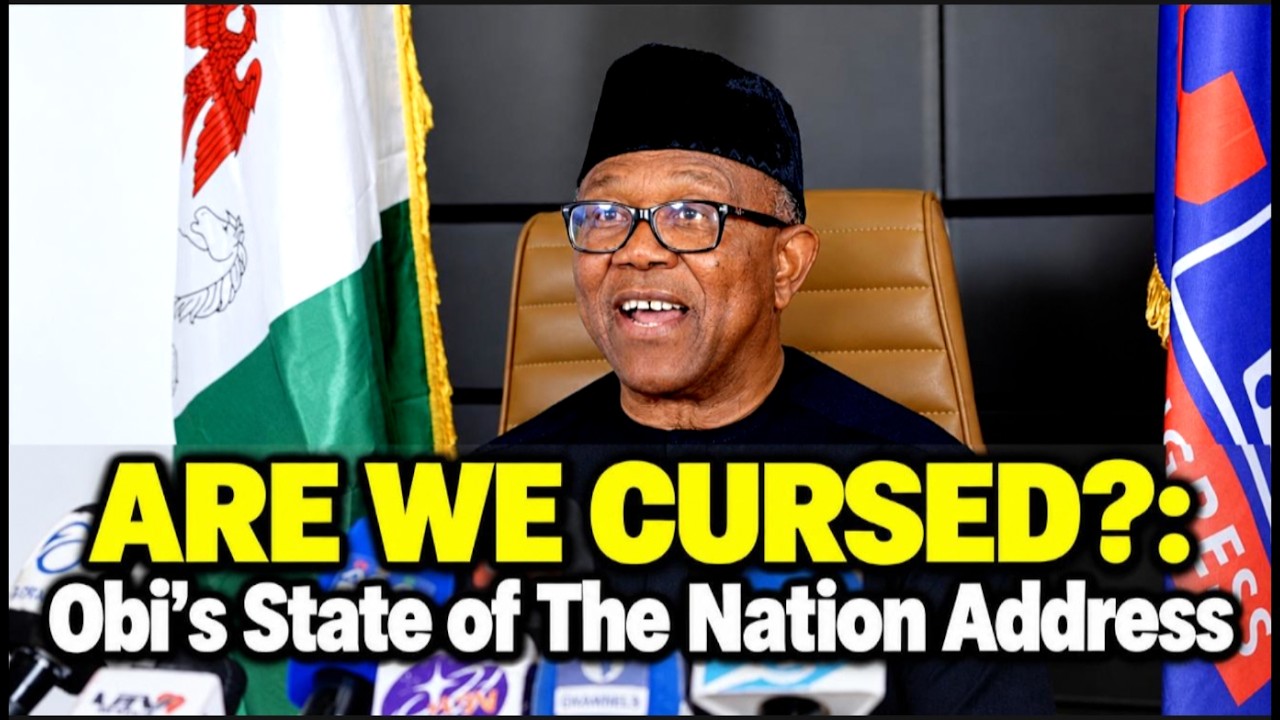
1. Summarise the video
This video features Peter Obi’s message to Nigerians on the occasion of the nation’s 66th Independence Anniversary (0:00-1:09). In his address, he calls for honest national reflection rather than simple celebration, posing the fundamental question: “Are we cursed or are we the cause?” (1:09-4:33).
Key challenges highlighted by Obi include:
- Poverty and Hardship: Over 140 million Nigerians living in poverty (2:24).
- Education Crisis: More than 18 million out-of-school children (2:30).
- Insecurity: Rampant banditry, kidnapping, and extreme food insecurity affecting millions (2:34-3:15).
- Social Indicators: Declining health metrics, including high infant mortality and low life expectancy (3:15-4:03).
Reflecting on recent visits:
- Obi recounts his recent visit to the Ramin Kura IDP camp in Sokoto State, emphasizing that “if one Nigerian lives in an IDP camp, the entire country is in an IDP camp” (5:03-6:32).
- He argues that the nation’s problem is not a lack of resources, but a failure to convert them into development and security (4:45-4:59).
Vision for a New Nigeria:
- He advocates for a shift from a consumption-based to a production-based economy (8:26).
- Promises include making governance measurable, prioritizing primary healthcare across Nigeria, and decisively tackling insecurity to allow farmers and students to return to their normal lives (7:30-9:14).
- He concludes with a message of hope and determination, asserting that “a new Nigeria is possible” if citizens are courageous and take responsibility for the nation’s future (10:02-11:37).
2. What is Peter Obi's message for Nigeria's 66th Independence Anniversary?
Peter Obi’s message for Nigeria’s 66th Independence Anniversary is a call for honest national reflection and a declaration that a new Nigeria is possible through determined leadership and accountability (1:09-1:49, …).
He argues that the country’s severe challenges, including widespread poverty, high youth unemployment, and extreme insecurity, are not due to a lack of resources, but a failure to manage them effectively (4:36-4:59). His key commitments for a new administration include:
- Economic Shift: Moving the country from a consumption-based to a production-based economy (8:26-8:47).
- Governance Reform: Prioritizing measurable, accountable, and welfare-centered leadership (7:30-7:42).
- Social Priorities: Investing heavily in education and primary healthcare for all citizens (8:47-9:17).
- Security: Decisively tackling insecurity so that farmers can return to their land and children can return to schools safely (7:55-8:09).
3. List his proposed policy priorities
In his 66th Independence Anniversary message, Peter Obi outlines several core policy priorities for a new administration (7:30-9:17):
- Governance Reform: He promises to make government measurable, accountable, and centered on the welfare of the people (7:33-7:39).
- Economic Shift: He aims to transition Nigeria from a consumption-based economy to a production-based economy, focusing on agriculture, manufacturing, and job creation (8:26-8:41).
- Security: He commits to decisively tackling insecurity so that farmers can safely work, children can return to school, and families can live without fear (7:55-8:07).
- Healthcare: He plans to prioritize functional primary healthcare, specifically proposing that there should be approximately 10,000 functional centers across Nigeria.
- Human Capital Development: He emphasizes investing in education and productivity to ensure young people can build meaningful lives (8:37-8:50).
4. What did Obi visit recently?
The speaker mentions that he recently returned from a two-day visit to Sokoto State (5:03-5:06). During this trip, he held extensive consultations with locals regarding issues such as insecurity, poverty, and unemployment. He concluded the visit by going to the Ramin Kura internally displaced persons (IDP) camp within the Sokoto metropolis (5:10-5:37).
5. What is the definition of a production economy?
The answer to that question isn’t in the video. However, this video is about Peter Obi’s Independence Day message where he discusses his vision for a new Nigeria, would you be interested in learning about that?
6. What does Obi mean by a production economy?
In his address, Peter Obi explains that shifting from a consumption-based to a production-based economy is intended to create jobs and expand opportunities for the nation (8:26-8:35). He specifies that this transformation involves supporting agriculture and manufacturing sectors, while also investing in human capital to ensure young people can build meaningful lives (8:35-8:46).
7. List all statistics he cites, and his comment about each
In his speech, Peter Obi highlights several critical statistics to reflect on the state of Nigeria, noting that these figures represent a failure of leadership and management:
- Poverty: Over 140 million Nigerians live in poverty and hardship (2:16-2:24).
- Out-of-school children: There are over 18 million out-of-school children (2:28-2:32).
- Hunger: The nation has moved from rank 109 to 115 on the hunger index, with 40 million Nigerians projected to face extreme hunger by the end of the year (2:56-3:12).
- Youth unemployment: Over 35 million youths are currently unemployed (3:31-3:35).
- Drug prevalence: Nigeria is at 14%, compared to the global average of 6% (3:44-3:54).
- Life expectancy: The average life expectancy is 54 years, significantly lower than the global average of 74 years (3:54-4:03).
Obi comments that these statistics demonstrate that Nigeria is currently the “worst place to be born” and reflects a failure to convert the nation’s immense human and natural resources into shared prosperity, security, and development (3:24-3:27, 4:47-4:59).
8. How does Obi propose fixing these issues?
To address the nation’s critical challenges, Peter Obi outlines a comprehensive shift toward purposeful leadership and systemic reform (7:30-7:53). His proposals include:
- Economic Transition: Shifting the economy from consumption to production to foster job creation, boost manufacturing, and support agriculture (8:26-8:41).
- Security Restoration: Decisively tackling insecurity so that farmers can return to their land, children can go back to school, and families can live without fear (7:55-8:07).
- Human Capital Investment: Prioritizing education and healthcare as the foundations of a functioning economy (8:47-8:56). He specifically proposes establishing 10,000 functional primary healthcare centers across the country (9:02-9:14).
- Governance Reform: Implementing measurable and accountable governance that centers on the welfare of the people rather than just rhetoric (7:33-7:39).
9. How will he measure governance success?
Peter Obi states that under his leadership, governance will be measurable and accountable (7:33-7:36). He specifies that within the first one year, citizens will see tangible impacts of his leadership on their lives (7:44-7:53). Specific metrics he cites to indicate progress include:
- Security: Ensuring farmers can return to their farms, children can return to school, and businesses can operate safely (7:56-8:07).
- Healthcare: His specific target is to have 10,000 functional primary healthcare centers across the country’s wards (9:02-9:14).
- Economic Participation: Successfully transitioning people from IDP camps back into their communities to engage in productive economic activity (8:09-8:24).
10. How will he improve healthcare access?
Peter Obi identifies healthcare as a fundamental foundation of a functioning economy (8:47-9:00). To improve access, he proposes ensuring there are 10,000 functional primary healthcare centers across the country’s wards (9:02-9:14).
11. Does he mention funding for health?
The video does not contain information regarding specific funding or budget details for the proposed healthcare improvements. Peter Obi focuses his address on the goal of establishing 10,000 functional primary healthcare centers to serve as a foundation for the economy (9:02-9:14). The answer to that specific question about budget figures isn’t in the video. However, this video is about Peter Obi’s Independence Day speech regarding Nigeria’s socio-economic challenges and his vision for the country, would you be interested in learning about that?
12. How does he plan to support farmers?
Peter Obi plans to support farmers primarily by decisively addressing insecurity to ensure they can safely return to their farms (7:55-8:00). Additionally, he proposes moving Nigeria from a consumption-based to a production-based economy, which includes providing systemic support for the agricultural sector to create jobs and expand opportunities (8:26-8:37).
13. Are there other economic goals?
Beyond the shift to a production-based economy and support for agriculture, Peter Obi outlines several additional economic goals in his speech (8:26-8:41):
- Job Creation: Prioritizing sectors that generate meaningful employment to reduce the nation’s high unemployment rate (8:32-8:44).
- Manufacturing Expansion: Actively supporting the growth of the manufacturing sector to boost national productivity (8:35-8:37).
- Human Capital Investment: Investing in the workforce through better education and healthcare, which he describes as the essential foundations of a functioning economy (8:39-9:00).
- Productive Enterprise: Focusing on fostering a business environment that encourages innovation and economic participation (8:53-8:56).
14. How will he create more jobs?
Peter Obi plans to generate more jobs primarily by transitioning Nigeria from a consumption-based to a production-based economy (8:26-8:32). He outlines several key strategies to achieve this:
- Boosting Key Sectors: He intends to provide active support for agriculture and manufacturing, which he identifies as vital for creating employment and expanding national opportunities (8:32-8:39).
- Investing in Human Capital: By prioritizing education and healthcare, he aims to build a more capable workforce, which he views as a foundational element of a thriving, productive economy (8:39-8:47, 8:47-9:00).
- Supporting Enterprise: He plans to focus on fostering productive enterprises that allow young people to find meaningful work and build successful lives (8:39-8:44, …).
15. Make a comprehensive list of all original initiatives he announced, hows, beyond promises.
In his speech, Peter Obi detailed the following specific initiatives and implementation strategies to address Nigeria’s national challenges:
- Healthcare Infrastructure: He intends to establish 10,000 functional primary healthcare centers across the country’s wards (9:02-9:14).
- Economic Reorientation: He plans to transition the national economy from consumption-based to production-based, with a specific focus on supporting agriculture and manufacturing to foster job growth (8:26-8:37).
- Insecurity Strategy: He pledges to decisively confront insecurity as a prerequisite to enabling farmers to return to their lands and children to attend school safely (7:55-8:07).
- Leadership by Example: He commits to spending his four-year term traveling within Nigeria for his holidays, specifically visiting states like Zamfara, Borno, and Ekiti, rather than traveling abroad, to better understand and listen to the challenges faced by citizens (9:17-9:57).
- Measurable Governance: He promises to make government operations accountable and measurable, ensuring that the tangible impact of his leadership is visible to the public within his first year in office (7:33-7:53).
16. How does he plan to fix insecurity?
In his speech, Peter Obi states that he will decisively confront insecurity so that citizens can live without fear. His stated outcomes for this initiative include (7:55-8:09):
- Returning farmers to their farms: By securing the environment, he aims to allow agricultural work to resume safely.
- Securing education: He plans to ensure that children can return to schools.
- Restoring safety for businesses: He intends to create an environment where businesses can operate freely.
- Ending displacement: He emphasizes that no Nigerian should be forced to live in an Internally Displaced Persons (IDP) camp and commits to ensuring that those currently in such camps can return to their communities (8:09-8:21).