https://grok.com/share/c2hhcmQtMg_0dc8c36e-772b-4034-9d24-604a33c10a18
Artifacts refer to objects, items, or phenomena that are created, produced, or result from human activity, processes, or systems. In plain English, an artifact is essentially something made or altered by people, often as a byproduct or evidence of a particular action, rather than occurring naturally. The term’s meaning varies by context, but it generally implies a tangible or observable creation that may hold historical, cultural, technical, or diagnostic value. Below, I outline key interpretations, accompanied by examples and demonstrative usages.
- In Archaeology and History
Artifacts are physical objects crafted or modified by humans in the past, serving as evidence of historical cultures, behaviors, or technologies. These are typically discovered through excavation and studied to understand human evolution or societies.
- Examples: A stone axe from the Neolithic period, ancient pottery shards, or Roman coins.
- Demonstrative Usages:
- “Archaeologists unearthed artifacts such as arrowheads and beads, which provided insights into the indigenous tribe’s hunting practices.”
- “The museum’s exhibit features artifacts from the Egyptian pyramids, including jewelry and tools that reveal daily life in antiquity.”
- In Software Development and Engineering
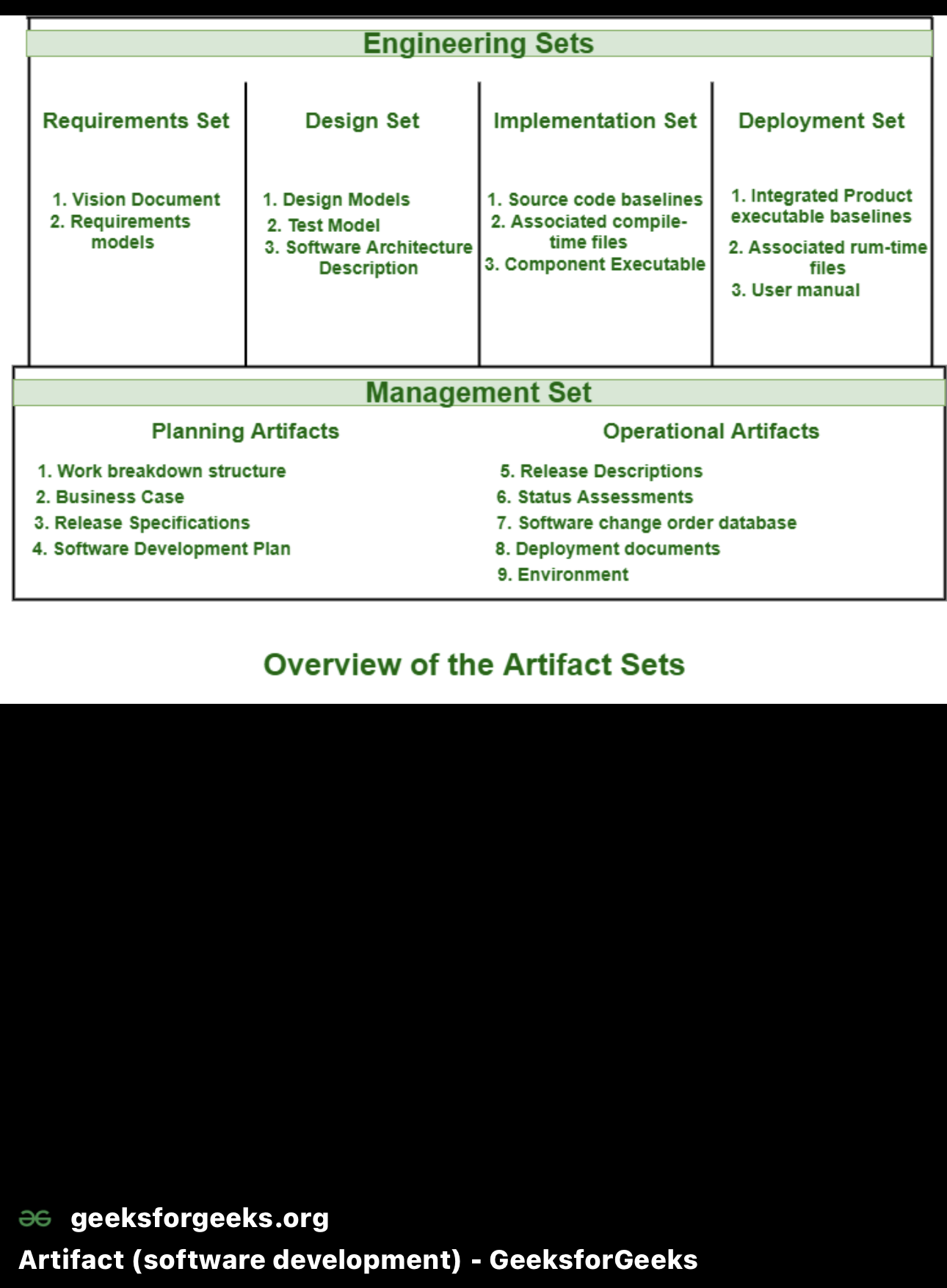
Artifacts denote files or outputs generated during the software build, testing, or deployment process. These are intermediate or final products of automated systems, such as compiled code or reports, used for distribution or analysis.
- Examples: A .JAR file in Java development, a Docker image, or a build log report.
- Demonstrative Usages:
- “The continuous integration pipeline produced several artifacts, including executable binaries and documentation files, ready for deployment.”
- “Developers archived the build artifacts to ensure reproducibility in future versions of the application.”
- In Artificial Intelligence and Image Processing
Artifacts describe unintended distortions, errors, or anomalies in generated or processed digital content, often resulting from algorithmic limitations or data compression.
- Examples: Blurry edges or unnatural patterns in AI-generated images (e.g., extra fingers on a hand), or pixelation in compressed videos.
- Demonstrative Usages:
- “The AI model’s output showed artifacts like color bleeding, which indicated a need for improved training data.”
- “In photo editing software, compression artifacts can appear as blocky distortions, reducing the image’s overall quality.”
- In Medicine and Imaging
Artifacts are spurious signals or distortions in diagnostic images or tests, caused by equipment, patient movement, or external factors, which can mimic or obscure real findings.
- Examples: Motion artifacts in an MRI scan appearing as blurred lines, or metallic streaks in a CT image due to implants.
- Demonstrative Usages:
- “The radiologist noted artifacts in the ultrasound caused by air bubbles, which complicated the assessment of the organ.”
- “To minimize artifacts in X-rays, patients are instructed to remain still during the procedure.”
- In General or Cultural Contexts
More broadly, artifacts can refer to any human-made object or cultural product that represents ideas, traditions, or errors in a system.
- Examples: A handwritten letter as a cultural artifact, or statistical artifacts in data analysis (e.g., outliers from measurement errors).
- Demonstrative Usages:
- “Folklore stories are verbal artifacts passed down through generations, preserving community values.”
- “The survey results included artifacts from biased sampling, leading to inaccurate conclusions.”
In summary, while the core idea of an artifact involves human creation or influence, its precise application depends on the field. If your query pertains to a specific domain, additional details would allow for a more tailored explanation.